

Skip to content

Hurricane restoration in Tampa, FL

Opened, dried and rebuilt to the code in force today.

We rebuild Tampa Bay homes and condos after hurricanes and floods, from drying the structure to the final inspection. Each rebuild is checked against current flood and wind code first.

Price
Quoted on site
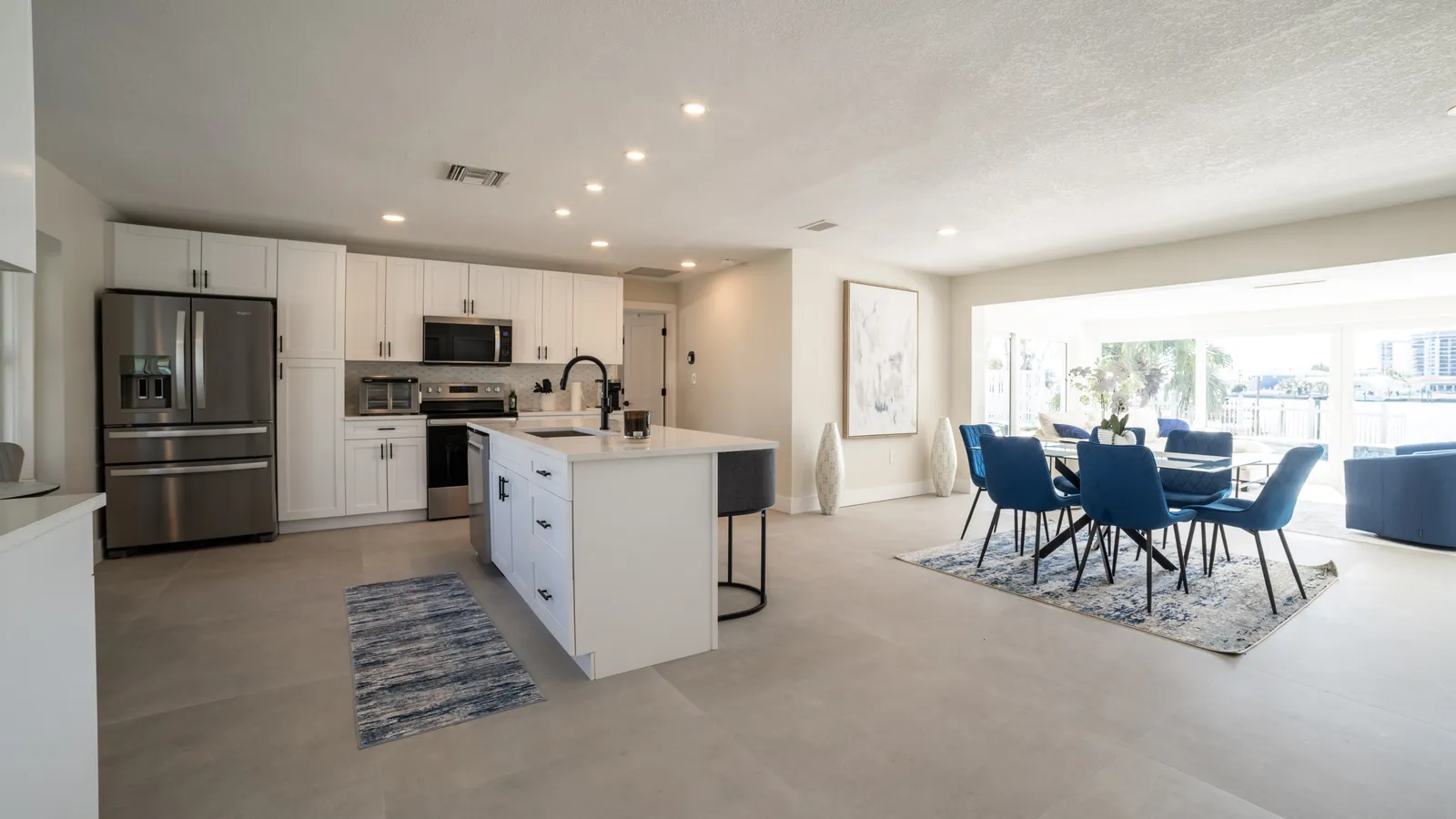
White kitchen and island open to the dining area on gray tile, Treasure Island, FL
Flood rebuild, Treasure Island

What we do

Hurricane restoration in Tampa starts where the water stopped. Storm and flood damage is rarely only what shows: water wicks up drywall and insulation above the line it left, soaks the subfloor and the bottom of the framing, and feeds mold until the house is opened and dried. So the work runs in a fixed order: wet drywall, insulation and flooring come out, the structure dries, and only then is it rebuilt and refinished.

More on what we do

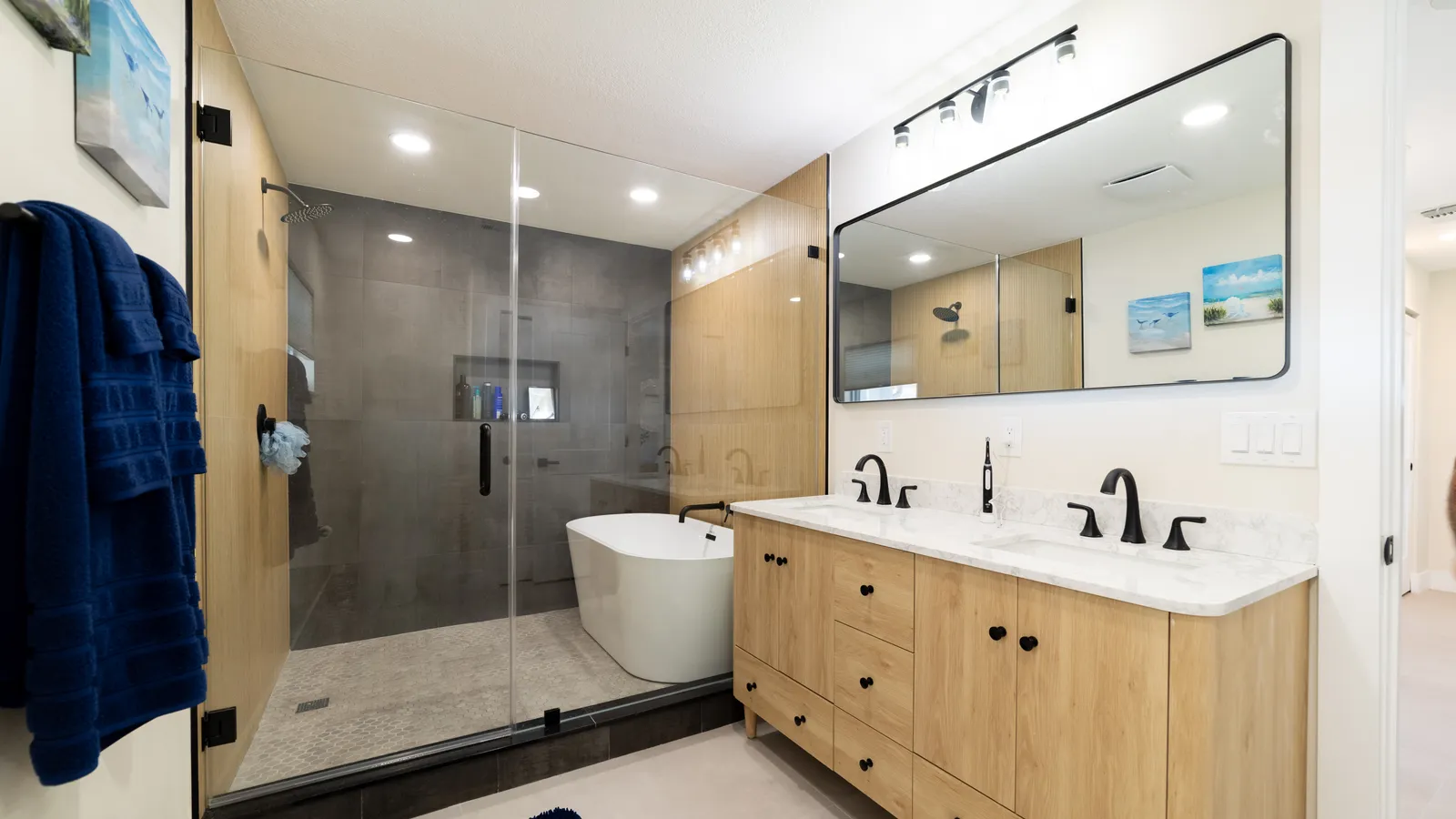
Our flood rebuild in Treasure Island shows where that order ends: a waterfront home finished again with light gray tile floors, a white shaker kitchen and new baths. Closing a wall that is still wet traps moisture behind it, so drying is not cut short to save a day. Plumbing that failed is repaired under our plumbing contractor license, and new floors follow the same order as any flooring installation.

Services we offer

  • Storm and Flood Damage Rebuilds
Living room with sliding glass doors to the pool deck, Treasure Island, FL
Flood rebuild, Treasure Island

What's included

  • Rebuilds after storm and flood damage, one room or the whole house
  • Wet drywall, insulation and flooring removed before anything closes
  • Homes checked against FEMA’s 50 percent rule before the scope is set
  • Elevation and flood-resistant materials where the rule requires them
  • Wind-rated windows and doors where openings are replaced
  • Knockdown rebuilds as new construction where that is the better plan

How a construction company project runs, step by step

What it costs and how long it takes

Deposit
In your estimate
The deposit is set in your written estimate, then milestone billing, so payments track completed work.
Timeline
Project-specific
Drying comes first, then the claim and the permit, then the rebuild, whose length depends on how far the water reached.
Permits
For the rebuild
A storm rebuild is permitted work; in a mapped flood zone the permit office also weighs the repair against the building’s value.
Warranty
2 years, in writing
A written workmanship warranty on every qualifying project, with coverage, exclusions and how to make a claim spelled out in your contract.
More on cost and timeline

A storm rebuild is priced from a walkthrough of the damage, and its scope is written to what that walkthrough can see. Once the walls are open, anything beyond it, wet framing that has to be replaced or a corroded supply line, reaches you as a written change order before work on it starts. The deposit is set in your written estimate, and where the 50 percent rule applies, the scope is drawn to the rule from the start.

Insurance often sets the early pace more than the construction does, since the adjuster’s visit and the claim come before much can be ordered. Permit review follows, and after a storm that reached many homes, permit offices and suppliers are busy across the whole region, so the written schedule allows for both. A house that is rebuilt from the ground up runs on the schedule of new home construction instead.

Splitting one repair into smaller permits does not get a house under the line. Bradenton treats several permits for one improvement as phasing and adds them together, and St. Pete Beach counts the cost of all the work and permits no phasing at all, so the scope is drawn as one job from the start.

What to know

Market valueRepair costSet shareElevate

Flood zones

After a flood, the rules come before the design. Under FEMA’s substantial-improvement and substantial-damage rules, when the cost of repairing or improving a home in a mapped special flood hazard area reaches a set share of the building’s market value, the whole structure has to be brought up to current floodplain requirements, which can mean elevating it.

More on flood zones

The federal minimum is 50 percent; some cities set it lower, so check your city, and our guide to remodeling in a flood zone explains how the share is measured.

We check where your home sits against that threshold before the scope is set, so the rebuild you price is one the permit office will approve. The pages for our Tampa headquarters, Seminole office and Sarasota office set out the storms on record in each county.

A house’s age says much about how it will fare. Hillsborough County classes any structure begun before June 18, 1980, the day the county’s flood insurance rate map took effect, as pre-FIRM, and Bradenton’s own 50 percent rule FAQ says most structures built before 1975 do not meet FEMA’s elevation requirements.

Each office also sets how the building’s value is found. The Hillsborough County Property Appraiser offers an online 50% Rule calculator, St. Petersburg starts from the Pinellas County Property Appraiser’s assessment and accepts an independent appraisal completed within the last 12 months, and Bradenton adds 20 percent to Manatee County’s improvement value when it uses the appraiser’s figure. A higher, documented value leaves more room under the line.

Required elevationFlood-tolerant belowImpactglass

Current code

A rebuild past that threshold meets today’s floodplain rules, which can mean raising the lowest floor to the elevation the flood map and local ordinance require, with materials below it that tolerate floodwater. Replaced windows and doors have to meet the Florida Building Code’s wind requirements, which on the coast often means impact-rated glass or shutters.

More on current code

Some houses are not worth raising. When the damage, the elevation needed and the age of the structure all point the same way, taking the house down and building again on the same lot can cost less than lifting and rebuilding it, and that becomes new home construction under the same contract. The comparison is made with you before either is designed.

The systems follow the same logic. After Helene, Tarpon Springs gave notice that electrical, mechanical and plumbing systems replaced because of flooding must sit above the base flood elevation plus 1 foot, unless they are built to keep water out and resist flood loads, so a rebuilt water heater, air handler or electrical panel may go back higher than it was.

Room by roomInsurer first

First steps

Before anything is removed after a storm, photograph the damage room by room and call your insurer, who may want to see it first. Hurricanes and tropical storms bring their own damage: water pushed in under doors, ceilings soaked from above, flooded floors and walls.

More on first steps

Wet material left in place grows mold within days, so what has to come out comes out once the insurer has seen it, and the structure is dried and checked before anything closes it in.

Helene’s record surge in 2024 flooded homes and condos along the Tampa Bay and Pinellas coast, and a condo it flooded is among the rebuilds we have taken on. In a condo, the rebuild inside the unit is yours to commission while the building’s structure is the association’s to repair, as condo remodeling sets out. The rebuild itself is permitted like any remodel, and our permits manager files it with the city or county; permits and inspections covers that stage.

What can start before a permit is set by each city’s own plan. Pinellas Park’s Post-Storm Recovery Permitting Plan, once activated, lets tarping, board-up, debris removal and the removal of wet drywall, insulation, carpet and cabinetry go ahead without a permit, but not structural, electrical, plumbing, gas or mechanical repairs; a new roof, windows and doors, a water heater, rewiring and replaced drywall all need one, inspected in person. The same plan asks owners to photograph all damage before repairs begin and to keep every invoice, estimate and insurance paper.

Repairs already made without a permit can still be put right. Tarpon Springs, for one, writes to homes in its flood zone believed damaged by Debby, Helene or Milton that have no permit on file, asks the owners to contact the Building Department within 60 days, and lets repairs already done be permitted after the fact for the storm damage permit fee, with no penalty.

What homeowners say

“Needed flood work remodel of our condo after Helene. We redid our floors, walls, bathrooms, kitchen, and more.”

George Nagy, flood restorationGoogle review by George Nagy, on our Tampa Google listing (opens in a new tab)

More reviews

Questions

Do you rebuild homes after flood damage?

Yes. We scope what has to come out and what can stay, check the home against FEMA’s 50% substantial-improvement rule, and rebuild under one contract and one permit file.

Can a flooded condo be rebuilt from the inside?

Yes. Inside the unit, the drywall, floors, cabinets and fixtures are rebuilt under one contract, while the building’s structure and common areas are the association’s to repair; condo remodeling sets out where that line usually falls.

Is it better to raise the house or to rebuild it?

It depends on the house: its foundation, its age, how far it has to go up and what the storm left. Where lifting costs close to building again, new home construction on the same lot is worth pricing beside it.

What does the 50 percent rule compare?

The cost of the repair or improvement against the market value of the building alone, not the land, for a home in a mapped special flood hazard area. Since June 2025, Florida law has barred communities from adding up unrelated projects over a set number of years, though it is worth asking the floodplain office how it treats earlier permits; our flood-zone guide explains the test.

Should we hire a crew that knocks on the door after a storm?

Not before checking its license on the state’s DBPR search. Contracting without a license during a declared state of emergency is a third-degree felony in Florida, an unlicensed contractor has no right to enforce the contract it signed, and the state’s recovery fund pays only for losses caused by licensed contractors.

Do you rebuild storm-damaged homes in Pinellas County?

Yes, from our Seminole office. Helene’s surge set new records at the St. Petersburg tide gauge, whose record runs back to 1947, and at the Clearwater gauge, whose record starts in 1973, and unincorporated Pinellas counts a home as substantially damaged when the repair reaches 49 percent of its value without the land.

How high did the water reach inside?

Call us at (813) 536-5344Let’s talk