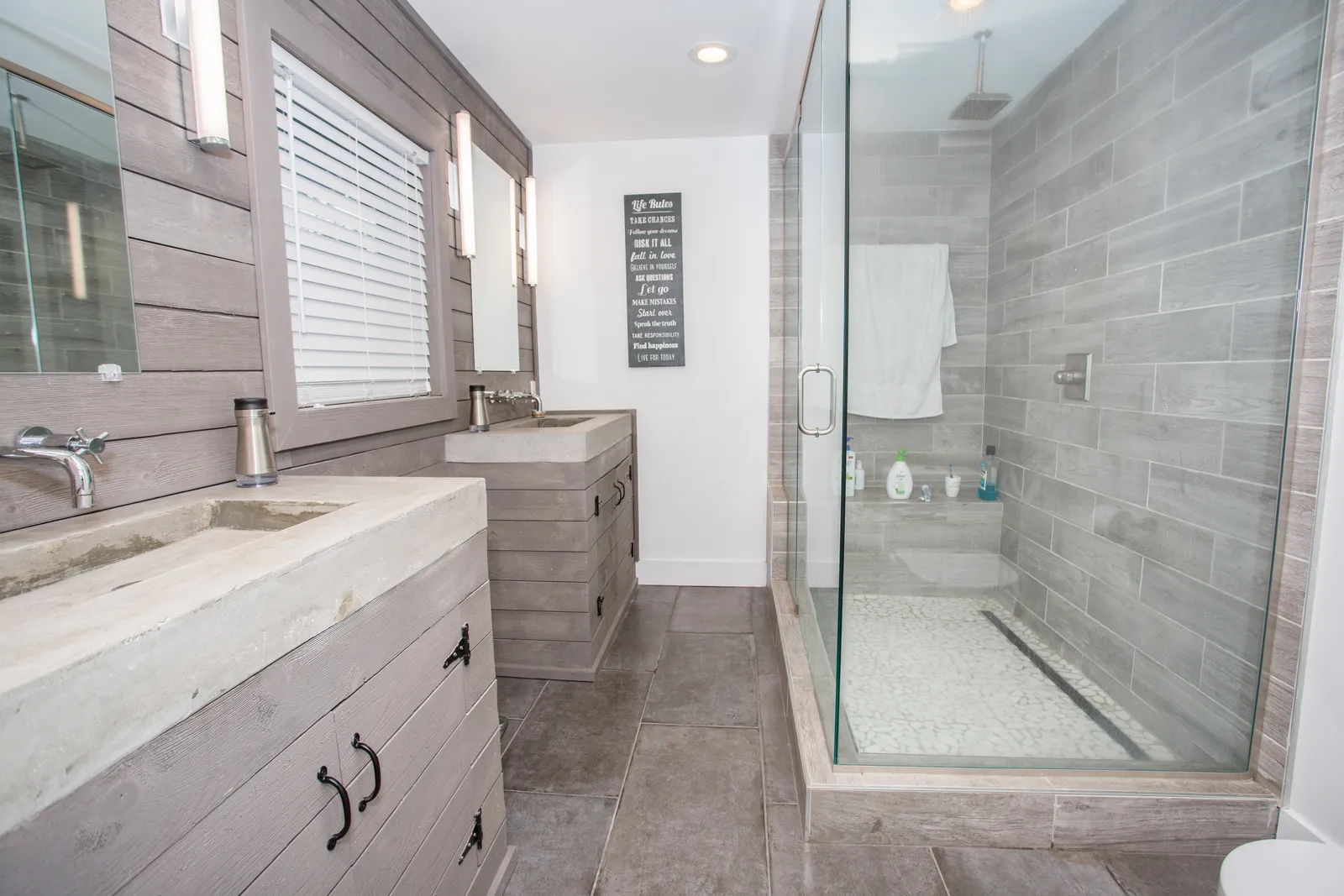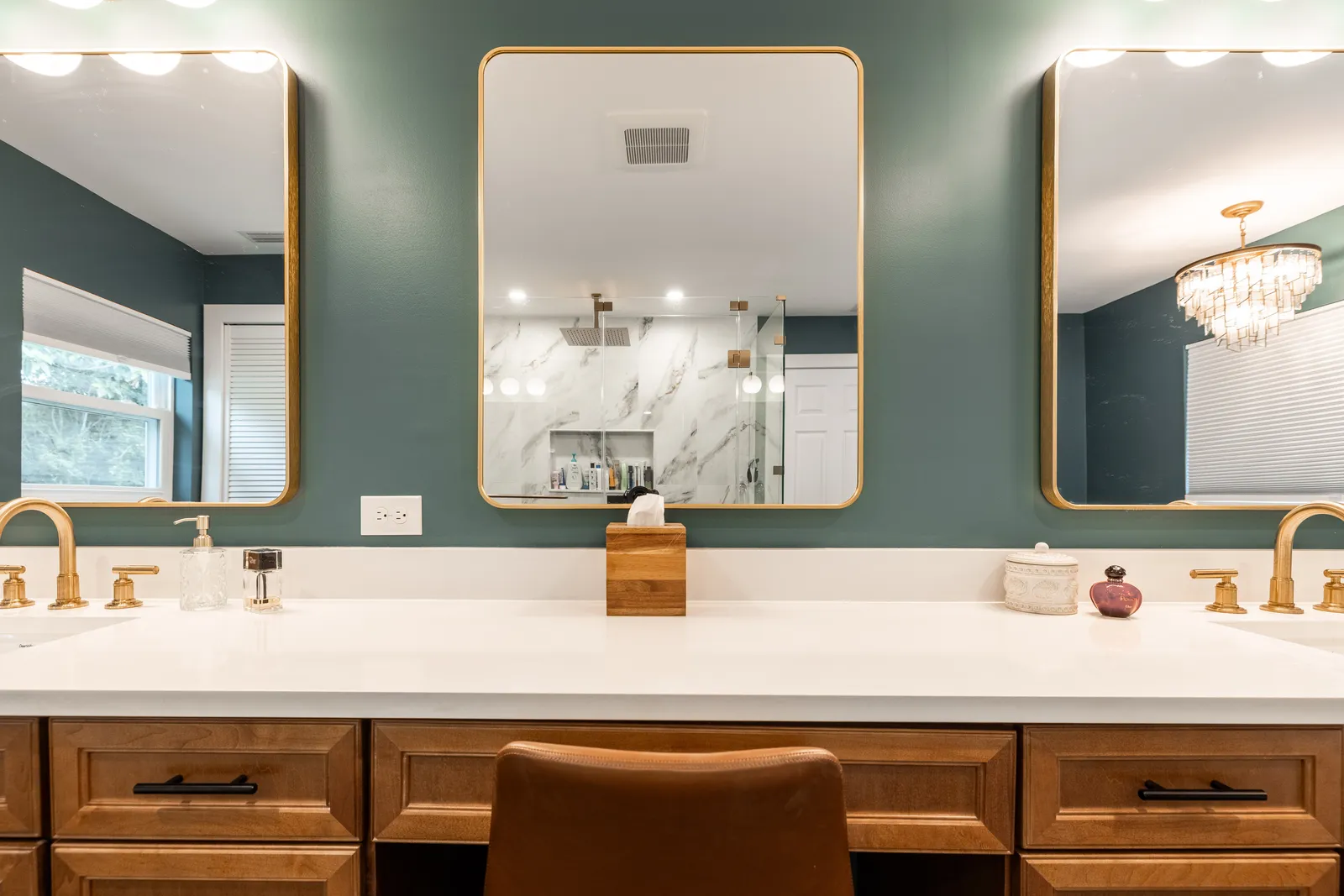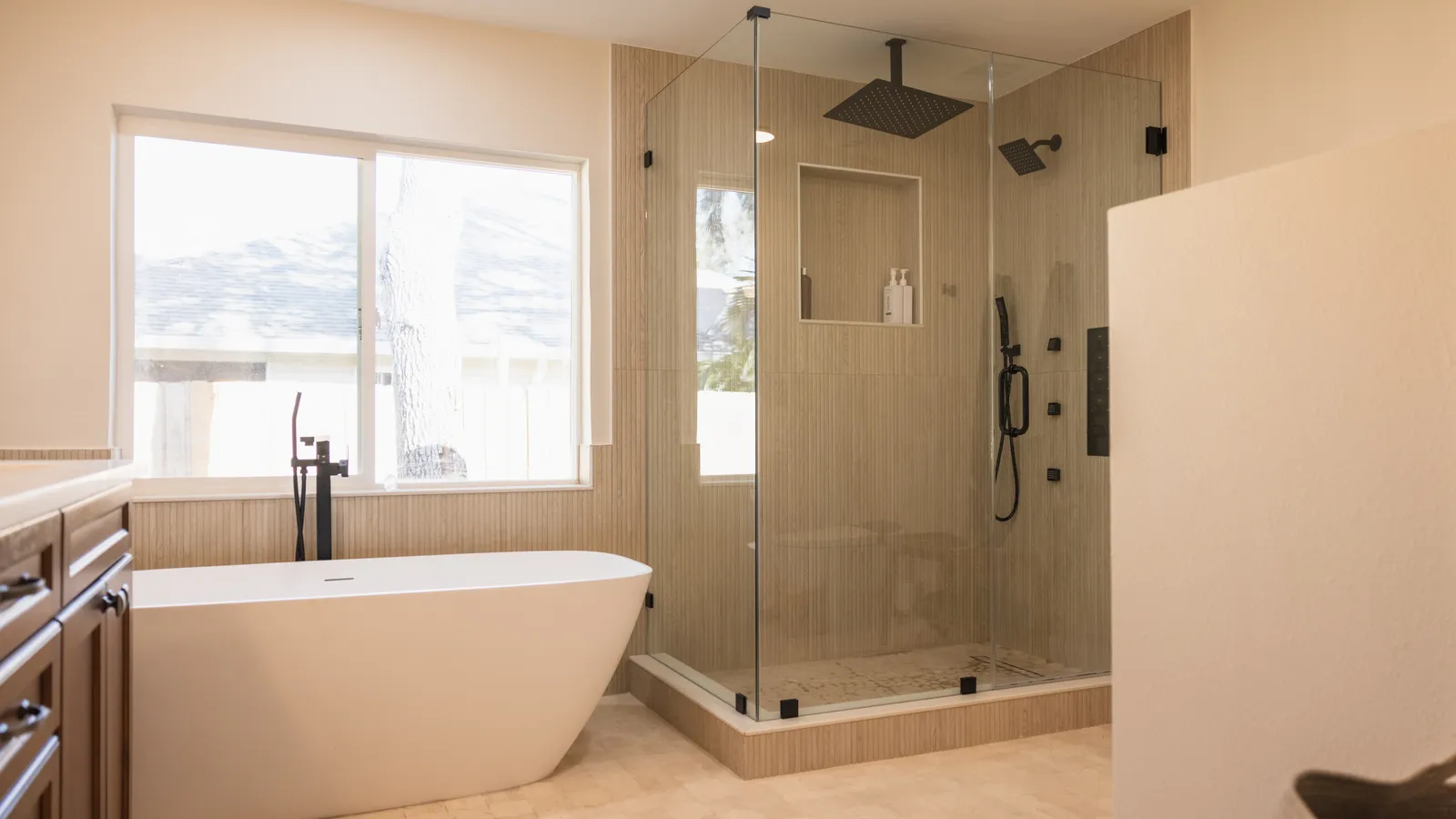
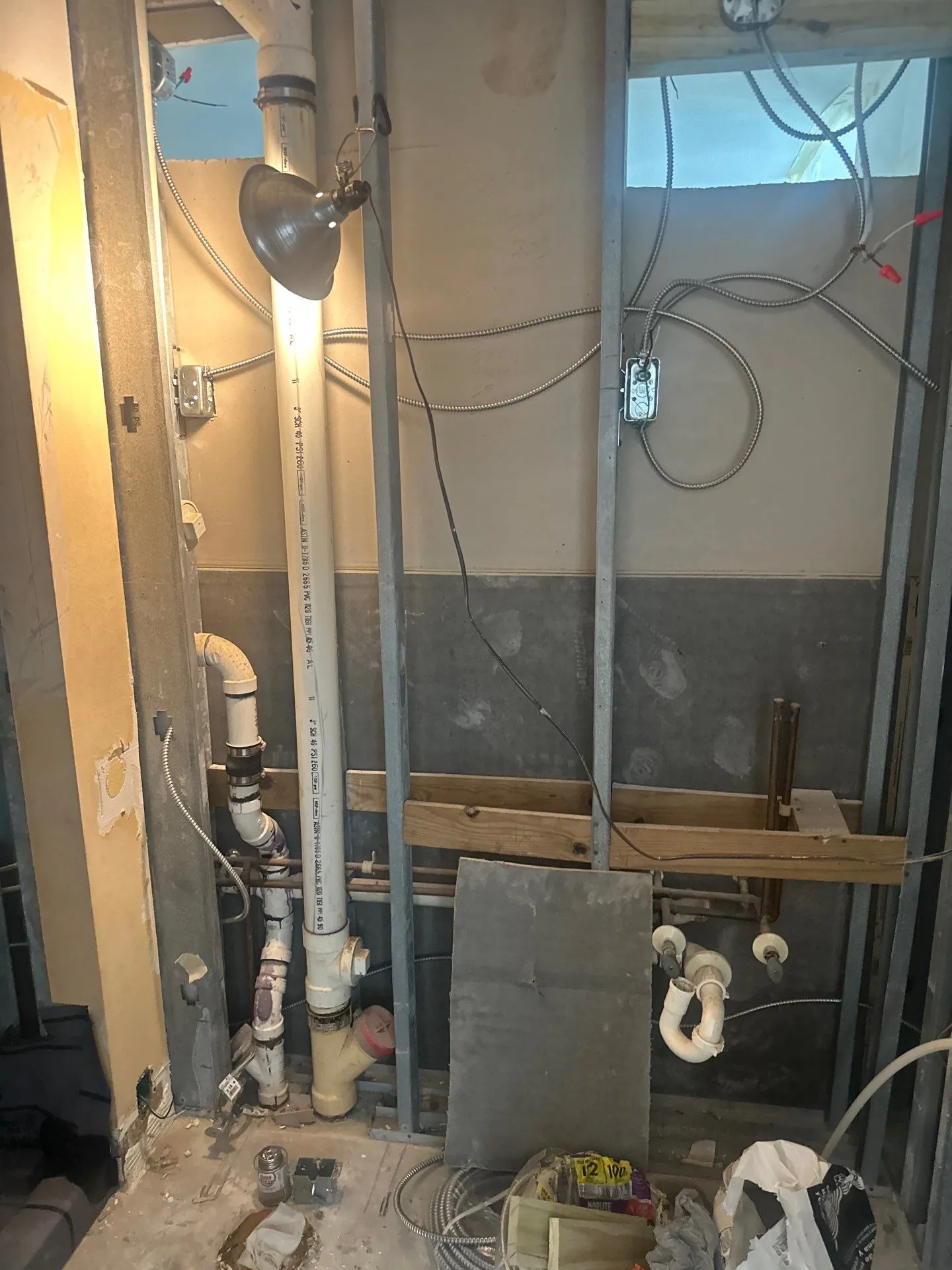
That is why two bathrooms that look alike on the first visit can end up on very different schedules and budgets. Here is what tends to turn up behind the walls in Tampa Bay homes, what it means for the job, and how a written estimate should handle it.
What commonly turns up behind bathroom walls and floors
Not every bathroom hides a problem. These are the findings that come up most often once a room is opened:
| What turns up | Clues you might notice beforehand | What it usually means for the job |
|---|---|---|
| Rotted subfloor or framing | A soft spot near the toilet or tub, tile that cracks or lifts | The damaged wood is cut out and replaced before the new floor goes down |
| Mold on drywall or framing | A musty smell, staining that keeps coming back, peeling paint | The source is found and fixed, and affected material is removed |
| Corroded supply lines or a cracked drain | Low water pressure, slow drains, a stain on the ceiling below | Old pipe is replaced while the wall is already open |
| A failed or missing shower waterproofing layer | Loose grout, dark grout lines that never dry, a damp wall behind the shower | The shower waterproofing is rebuilt before any new tile goes on |
| A fan venting into the attic | Fogged mirrors that stay fogged, mildew on the ceiling | A new fan is sized to the room and ducted outdoors |
Why Tampa Bay bathrooms hide damage
Humidity here never really takes a season off. A bathroom fan that is too small, or one that pushes damp air into the attic instead of outdoors, leaves moisture in the room long after the shower is off. Add a slow drip at a valve or a shower pan that stopped doing its job years ago, and the wood behind the tile stays wet without anyone seeing it.
Age adds another layer. In parts of Seminole Heights, Tampa Palms, and South Tampa, it is common to find a bath fan that has been there for decades, its flexible duct crushed or its vent lost under attic insulation. A remodel in those homes usually swaps it for a fan matched to the room’s size, vented to the outdoors, and controlled by a timer or humidity sensor. If the whole house is that age, the guide to renovating an older house explains why systems like wiring and plumbing should come before finishes.
How a discovery changes the schedule
The same cost guide cites Fixr for a typical bathroom timeline of 2 to 4 weeks, with bigger projects running as long as 12. Damage found during demolition is one of the reasons a job lands at the long end.
When it happens, the order of work still holds. The damage gets repaired first. The inspector signs off on the rough plumbing and wiring while the walls are still open, and only after that do waterproofing, tile, and glass go in. Custom shower glass and vanities often have long lead times, so they get ordered before demolition. That way a repair does not stack a delivery delay on top of itself.
Permits frame all of this. Inside Tampa city limits, the permit for a bathroom remodel is an alteration permit that comes with plans, and even exploratory tear-out is covered by it. Replacing a shower pan, a valve, or any piping also counts as plumbing work, which the City permits as a plumbing job. The guide to bathroom remodel permits covers what triggers a permit and how inspections are scheduled.
What happens when Salt & Pepper finds something
On a Salt & Pepper job, a finding behind the wall is documented for you, and you get a written change order before any extra work happens. You know what was found and what fixing it will cost before the extra work starts.
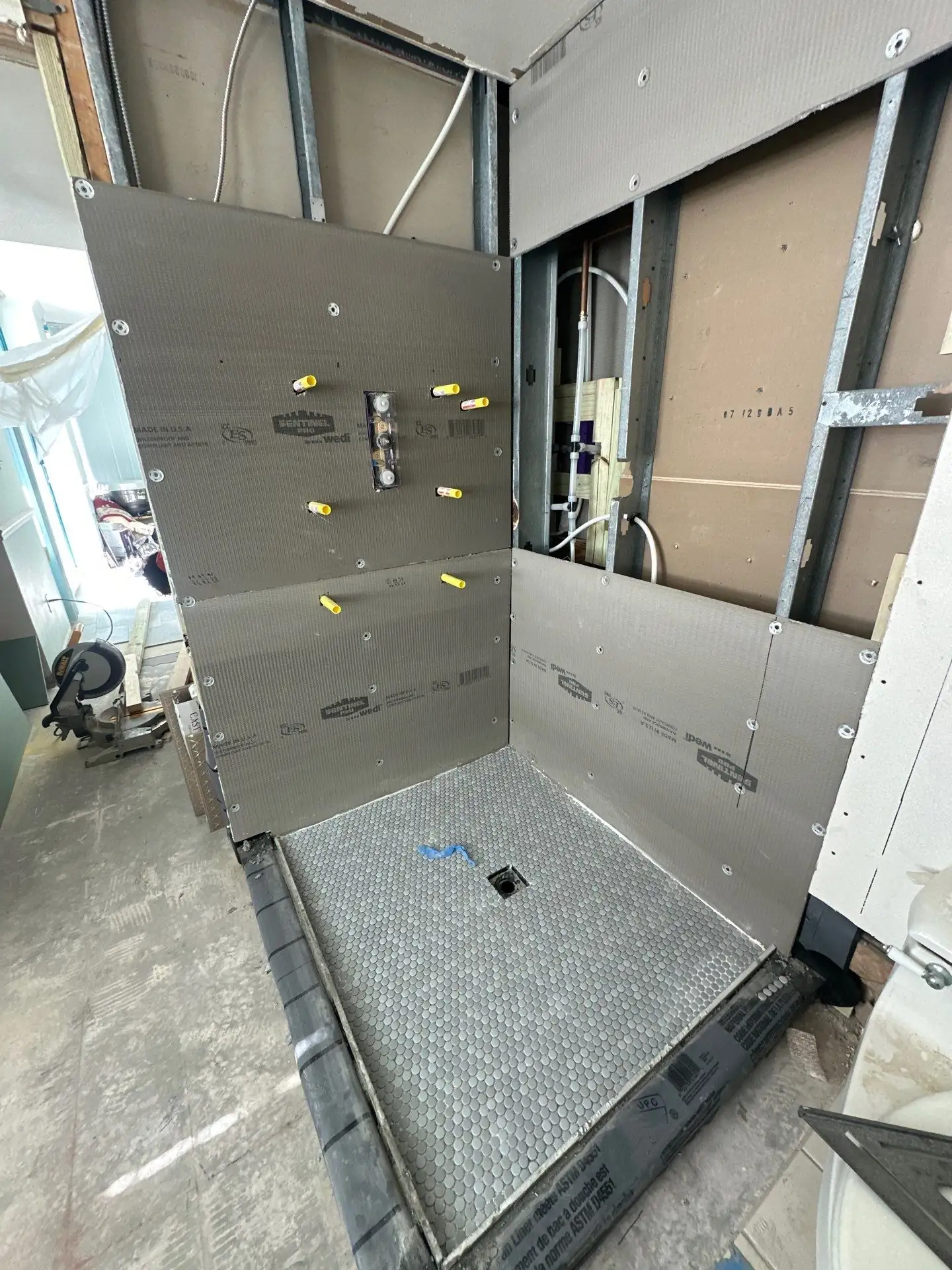
The work that matters most is the work you will never see once the room is finished: the waterproofing membrane behind the tile, the slope of the shower pan, the seal at every pipe and valve that goes through the wall, and ventilation that actually carries moisture out. Salt & Pepper builds those wet areas to spec and has them inspected before tile goes on, and the written 2-year workmanship warranty on qualifying projects stands behind that work. The licenses and warranty page explains what the warranty covers and lists the company’s Florida general contractor license, CGC1535727, and certified plumbing contractor license, CFC1434279.
What a written estimate should include
When two bids for one bathroom are thousands of dollars apart, they are usually pricing different work. Line them up and check each one for:
- Tear-out and haul-away, and how the rest of your home is protected from dust
- The waterproofing system, the shower pan, and how both get tested before tile
- Plumbing and electrical work, including where the exhaust fan vents
- Permits and inspections, and who pulls and books them
- How changes are priced once demolition starts
An estimate that never mentions waterproofing, ventilation, or what happens if demolition finds damage is incomplete, even if the tile price looks attractive. With Salt & Pepper, the deposit is set in the written estimate and billing follows completed milestones.
Frequently asked questions
Can a small cosmetic update still hide a problem?
Yes. A refresh that keeps the layout may not open every wall, so it may not find every issue. If you already see staining, a soft floor, or notice a musty smell, mention it at the consultation so the scope can include a closer look.
What changes in a condo?
In many buildings, the association owns the concrete slab, the structural walls, and the water risers that serve other units, so cutting into the slab or tying into a riser needs the board’s approval. Salt & Pepper keeps dust contained at your front door and plans any wet work to protect the neighbor downstairs. The condo remodeling page covers the association side.
Start with a look at the room you have
When you are ready to look at bathroom remodeling in Tampa, the free in-home consultation is the place to walk the room, point out anything that already worries you, and get a project-specific timeline. Reach the Tampa headquarters at (813) 536-5344, or find the Sarasota and Seminole office numbers on the contact page. As a remodeling company in Tampa, Salt & Pepper works across Hillsborough, Pasco, Pinellas, Sarasota, and Manatee counties.