
Skip to content

Home additions in Seminole, FL

More room in Seminole, under the city’s own forms.

We draw a Seminole addition to the flood review the city runs itself, not the 49 percent Pinellas County uses outside the limits. Each wing is framed for 145 mph.

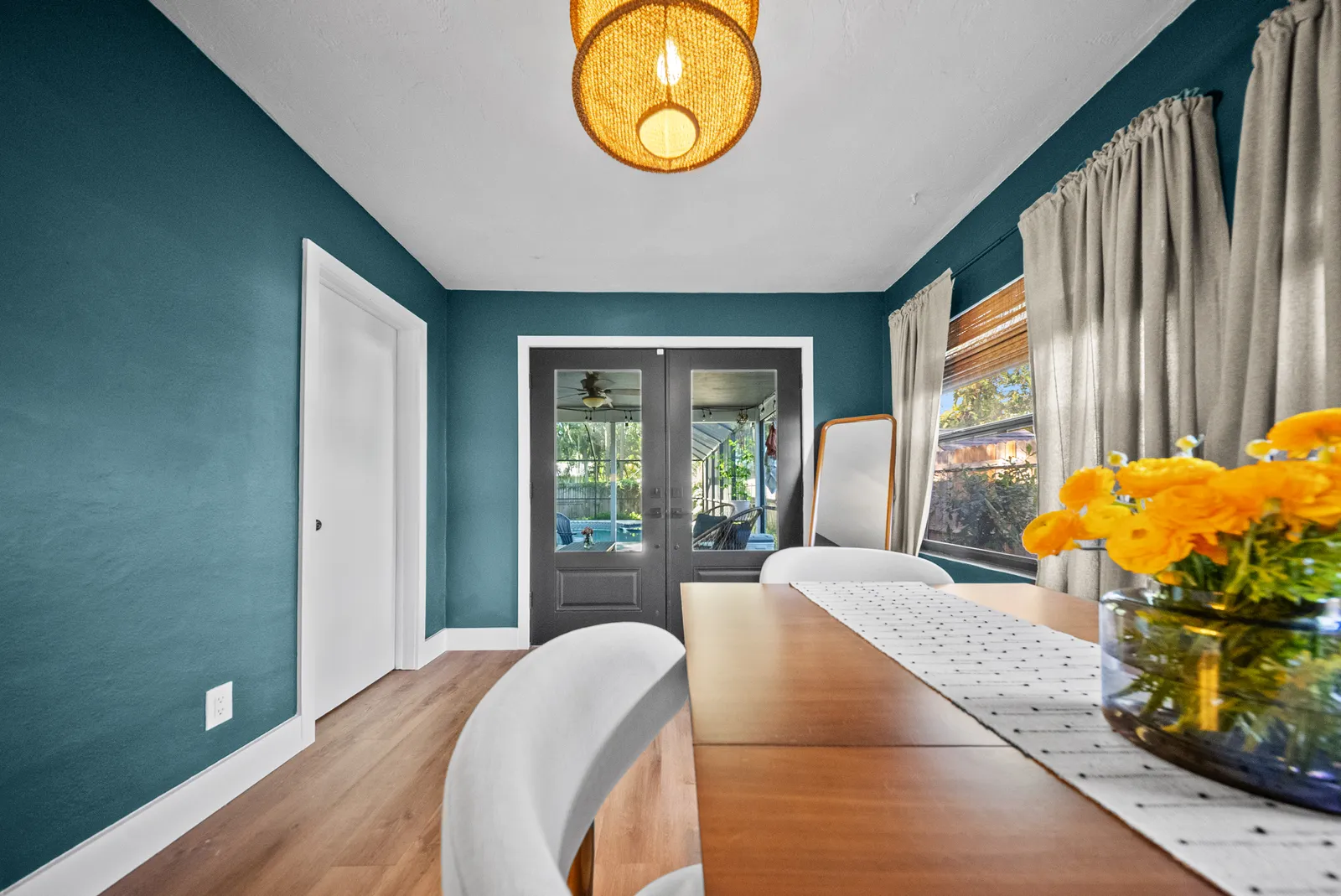
Long view of the dining room toward the French doors, St. Petersburg, FL
Home additions, Tampa Bay

The city’s own improvement review

Among the City of Seminole’s building permit forms sits a Substantial Improvement / Damage Review Form. On a house in the flood hazard area, a room addition is a likely candidate for it: the whole bill for the wing is weighed against what the existing structure is worth.

The percentage that form applies is the city’s own, read for each address when the permit set is prepared. Federal rules make 50 percent the minimum standard and let a community set a stricter, lower line, which is why Pinellas County can use 49 percent in its unincorporated areas while a city may set another.

More on flood review

An addition that reaches the city’s line brings the original house under the current rules for remodeling in a flood zone along with the wing. Pinellas County’s floodplain page asks for a foot of freeboard over the base flood elevation.

What to know

Trees in the footprint

For home additions in Seminole, the city handles tree removal itself: its building documents include a Tree Removal form and a Notice on Tree Removal Permits.

More on tree permits

Outside the city, Pinellas County’s tree rules apply, and the county says they hold countywide only where a municipal ordinance does not supersede them. The same oak can therefore fall under the city’s rule on one side of the line and the county’s on the other.

Shifting a wing a few feet, or turning a rear addition into a side one, often costs less than a removal that needs approval.

The wall with the electric meter

When the wall an addition will cover holds the electric meter, the service has to move. The City of Seminole lists a Duke Energy document, Reconstruction Requirements for Residential Properties, among its building forms, so the utility’s requirements sit in the same packet as the city’s.

More on meter wall

Moving a meter is work on both sides of it. The house side belongs to the electrician and goes on the permit; the utility side is scheduled with Duke Energy. A new room with its own air conditioning, or a bigger panel to feed it, can also change the size of the service the addition needs.

Framed for 145 mph

The new walls, roof framing and their straps are engineered for 145 mph, the design wind speed that applies to a house anywhere in Pinellas.

More on wind design

The hard part is the seam. Where the new roof meets the old, the new rafters or trusses are strapped to the new walls, and the joint between old framing and new is detailed so a gust cannot lift the roof along the line where they meet. Each window and door bought for the wing carries a Florida product approval rated for those pressures.

A sunroom with walls of glass meets the same figure, so its frame and glazing are chosen for pressure as much as for the view.

Staying home while it grows

Most Seminole homes are lived in by their owners: 6,607 of 9,084 occupied homes, or 72.7 percent, in the Census Bureau’s survey. An addition there often means a household living beside the work.

More on staying home

So the crew builds the wing as a closed box first: framed, roofed and dried in while the old exterior wall stays shut. The doorway between them is cut last, once the wing is weathertight, so the dust and the open wall last days rather than the whole build.

A household in one of the city’s condominium complexes has no yard to build into, since the ground belongs to the whole association. Its extra room comes from inside, through condo remodeling that moves the walls the association lets move.

Across the line in Largo

A home addition in Largo leaves Seminole’s forms behind and is filed with Largo’s own building department. Its plan reviewers take two to three weeks over a new set and about as long over a corrected one, with no expedited review on offer, so the wing’s drawings are finished before they go in.

More on Largo additions

Where Largo’s flood maps reach the parcel, the substantial improvement test applies, and the wing’s price is set against the building’s market value with the land left out, from a qualified independent appraisal or the Pinellas County Property Appraiser’s adjusted Just Value.

A second, smaller unit on the lot is the other way to add room in Largo, and our page on home remodeling in Largo sets out the city’s rules for one.

Opening a block wall

The Census Bureau’s median Seminole home was built in 1979, and Pinellas houses of that era are often concrete block, so the wall a new room opens through is usually masonry rather than studs.

More on block walls

A doorway cut through block needs a lintel or a beam above it, sized by the engineer for the roof load it will carry, and the cut is finished so the old wall and the new frame meet squarely.

The wing can be laid up in block to match, letting one coat of stucco run across old and new, or framed in wood and finished to look the same; the sealed drawings say which, and why.

What Seminole owners add

Seminole owners asking us for more room usually want one of five things: a family room pushed out the back, a primary suite addition with its own bath, a second story on a tight lot, a garage conversion that trades parking for a bedroom, and a kitchen and dining room widened by a few feet.

More on kinds of additions

Each meets the city differently. A second floor bears down on footings sized for one, at the same 145 mph a ground floor wing is drawn to. A garage conversion adds no footprint, yet it turns unconditioned space into a room, so on a flood-zone lot its price goes on the review form as surely as a new wing’s.

Before you sign in Seminole

Ask whether the address is inside Seminole’s city limits or an unincorporated pocket with a Seminole mailing address. Inside them, the City of Seminole’s Building Division takes the addition, on the city’s own flood paperwork; outside, Pinellas County does, with its line at 49 percent.

More on questions to ask

Ask who schedules Duke Energy if the meter moves, and whether moving it is in the price. Ask as well whether every tree inside the footprint has been checked against the city’s permit, because a removal discovered late can hold up the slab.

Ask whose license the permit will be pulled under; ours is CGC1535727, the number the Building Division sees on each of our applications.

What it costs

Price ranges
By size
Our room addition cost guide sets out what an addition costs by size and per square foot.
Deposit
In your estimate
The deposit is set in your written estimate, then milestone billing, so payments track completed work.
Changes
In writing
A written change order with the cost and schedule impact before any added work.
Warranty
2 years, in writing
A written workmanship warranty on every qualifying project, with coverage, exclusions and how to make a claim spelled out in your contract.

Questions

Is enclosing a screened porch an addition in Seminole?

Usually, once it is air-conditioned. Enclosing one means walls, windows and a floor built to the same standard as the house, and on a flood-zone lot the enclosure’s price joins the city’s improvement review.

How long does Pinellas County take to review an addition outside the city?

About 14 days for a residential permit, by the county’s own figure, and an addition’s engineered drawings are finished before that clock starts rather than revised while it runs.

What do home addition plans in Seminole need?

On a flood-zone lot, the city’s Substantial Improvement / Damage Review Form, then a tree permit for any tree the footprint takes and framing engineered for 145 mph. A wing over the meter wall adds Duke Energy’s requirements to the set.

Do you build home additions in Largo too?

Yes. An addition there goes on Largo’s own permit rather than Seminole’s forms, and the section on additions in Largo above sets out what the city asks of it.

Can a Seminole house take a second story?

Often, if its footings and walls can carry the extra floor, which a structural engineer settles before any plan is drawn. The new level is strapped for the county’s wind speed like a ground floor wing, and on a flood-zone lot its price joins the same review.

Sources

Sources checked November 12, 2026

  1. 1.

    The City of Seminole publishes a Substantial Improvement / Damage Review Form among its building permit forms. The City of Seminole lists its own Tree Removal form and a Notice on Tree Removal Permits among its building documents. The City of Seminole lists a Duke Energy Reconstruction Requirements for Residential Properties document among its building forms. City of Seminole, Building Applications & Forms (opens in a new tab)

  2. 2.

    In unincorporated Pinellas County, a home is considered substantially damaged when the cost to repair it is 49 percent or more of its value without the land. Pinellas County, Substantial Damage / Substantial Improvement (opens in a new tab)

  3. 3.

    Pinellas County says new or substantially improved buildings must be built at least one foot above the base flood elevation. Pinellas County, Construction in a Floodplain (opens in a new tab)

  4. 4.

    Pinellas County requires a permit to remove trees with a trunk diameter of 4 inches or greater and palms more than 6 feet tall, and its tree rules apply countywide where a municipal ordinance does not supersede them. Pinellas County, New Tree Regulations in Effect Jan. 23, 2026 (opens in a new tab)

  5. 5.

    A Pinellas County Construction Licensing Board local amendment sets the ultimate design wind speed for all incorporated and unincorporated Pinellas County at 145 mph for Risk Category II buildings, with interpolation allowed (135 mph for Risk Category I, 155 mph for III and 157 mph for IV). Florida Building Commission (floridabuilding.org), Local Amendments to the 8th Edition (2023) Florida Building Code, Structural, Pinellas County Construction Licensing Board entry for Section 1609.3 (opens in a new tab)

  6. 6.

    6,607 of the 9,084 occupied homes in Seminole are owner-occupied, which is 72.7 percent (computed from the survey counts and rounded to one decimal). US Census Bureau, American Community Survey 5-year estimates 2020-2024, table B25003 (Tenure), Seminole city, Florida (opens in a new tab)

  7. 7.

    Pinellas County says express permits take 0 to 2 business days, residential permits typically take about 14 days, and commercial permits take around 21 days. Pinellas County, Applying for a Building Permit (opens in a new tab)

  8. 8.

    Largo says initial acceptance of a permit application generally takes 1 to 2 business days, first review is typically completed within 10 to 14 business days, resubmittals generally need another 10 to 14 business days, and the city does not currently offer expedited plan review. City of Largo, Permit FAQ (opens in a new tab)

  9. 9.

    Largo defines market value for the substantial damage rule as the value of the building and structures excluding the land, set either by a qualified independent appraiser or by the Pinellas County Property Appraiser’s Just Value adjusted to approximate market value. City of Largo, Substantial Damage/FEMA 50% Rule (opens in a new tab)

  10. 10.

    Homes in Seminole have a median year built of 1979, with a margin of error of 2 years (2020-2024 American Community Survey). US Census Bureau, American Community Survey 5-year estimates 2020-2024, table B25035 (Median Year Structure Built), Seminole city, Florida (opens in a new tab)

Call our Seminole office at (813) 330-2684Let’s talk