
Skip to content

Home additions in St. Petersburg, FL

An addition in St. Pete, priced with the house it joins.

We plan St. Petersburg room additions and second stories against the city’s 49 percent flood sum, repairs and upgrades included. Ours here began on a new foundation.

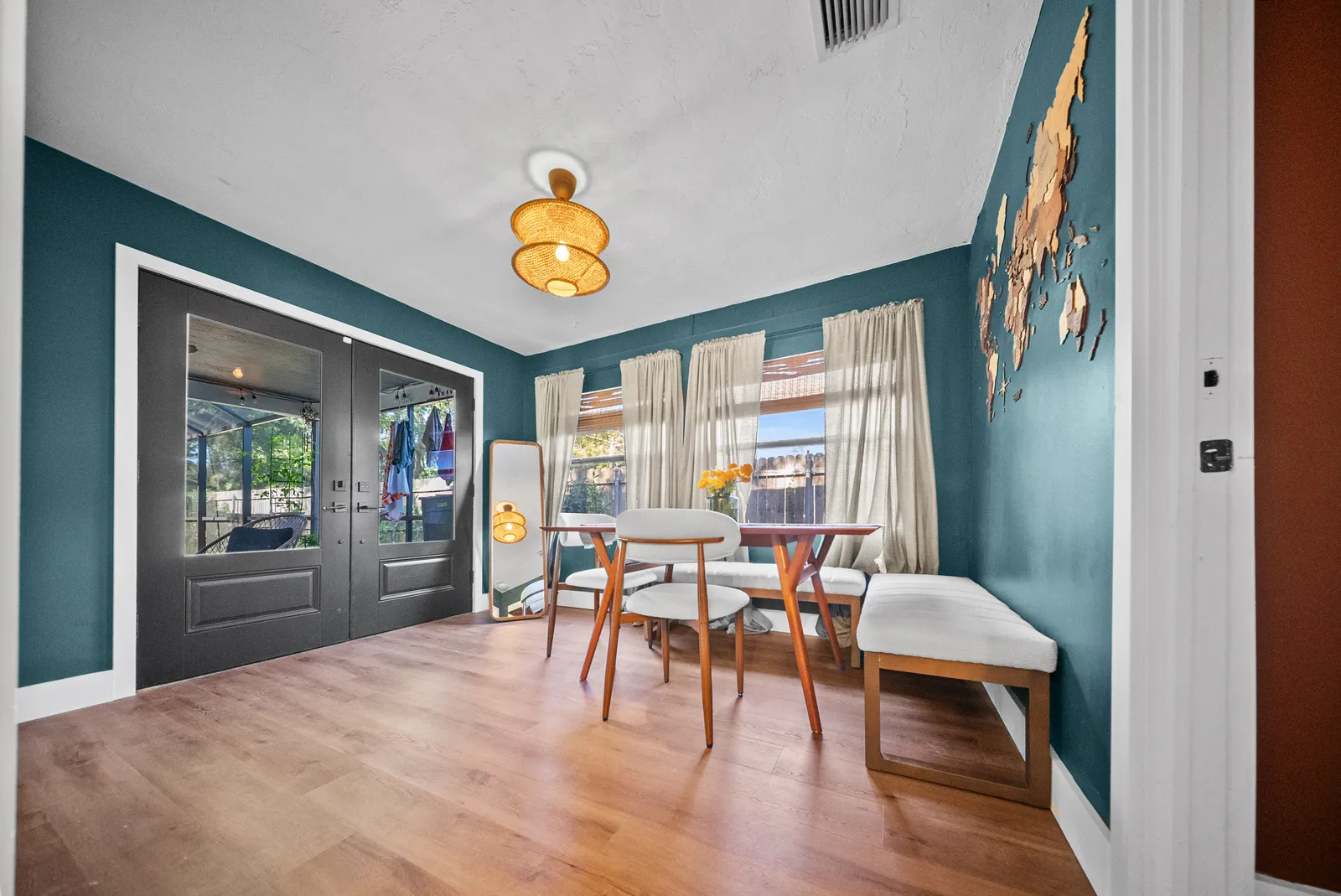
Dining room with deep teal walls, black French doors and a woven pendant, St. Petersburg, FL
Room addition, St. Petersburg

One sum, measured at 49 percent

The city’s letter of November 2024 to property owners lays the rule out. In FEMA’s flood hazard areas, St. Petersburg totals what is spent repairing or improving a structure, and once that total reaches 49 percent of the structure’s market value, the whole building must be brought into full compliance with current zoning, building and floodplain rules.

That can mean elevating it, using flood-resistant materials and adding flood venting. An addition counts as improvement by definition, so every dollar of it lands in that sum, and what matters is what else lands there with it.

What to know

The addition and the rooms it joins

An addition may not be the only work. Say the kitchen beside the addition is redone in the same job, or the hall bath next to it: the city’s cumulative sum takes that work in as well, alongside the foundation, framing and roof of the addition itself. A second story addition in St. Petersburg is counted the same way, its new floor and any strengthening of the walls below it in one sum.

More on existing rooms

So a St. Pete home addition gets one estimate with two columns: the added space, and everything done to the existing structure. Read side by side, the columns show how close the total runs to 49 percent and which of them would carry it over, and the owner chooses where to give: a finish in the old kitchen, a second bathroom, or a few feet off the new room.

The value the line is drawn from

For home additions in St. Petersburg, the 49 percent is taken from a figure the city derives from the Pinellas County Property Appraiser’s tax assessment of the structure.

More on assessed value

An owner who thinks that figure runs low may bring a state-licensed appraiser’s independent appraisal instead, provided it was completed in the past 12 months. Near the line, that second opinion of value can decide the job as surely as what the addition costs. If the city accepts a higher value, 49 percent of it is a larger number, and the addition and the existing-room work have more room under the line together.

An addition we built in the city

Our St. Petersburg room addition rose from a fresh foundation laid along one side of the existing structure. Its photographs track the build from studs and sheathing, window openings already framed, to a long dining space in teal with French doors, wood-look floors and a woven pendant, which leads on to a bedroom.

More on our addition

The same job included a bathroom in green wall tile, with a sliding glass door on the shower, a brass rain head and a wood vanity for two under arched mirrors.

Historic districts and the 250 square foot mark

Under City Code Section 16.30.070, adding onto a local landmark takes a Certificate of Appropriateness before construction starts. Inside a local historic district, the same requirement reaches every parcel.

More on 250 square feet

Size decides who can grant it. In a local historic district, applications that would go to the Community Planning and Preservation Commission can be approved by staff when the Historic Preservationist finds every standard met, but additions of 250 square feet or more are excluded from that path, along with new construction, demolitions and relocations. Just under 250 square feet, an addition can be decided by staff; at 250 or more, it goes before the commission.

So on a historic lot the footprint is settled first. Whether the room can do its job in less than 250 square feet is checked before the plan is drawn, because a few square feet decide which review a room addition gets.

From the assessment to the walkthrough

A St. Petersburg addition starts with the structure’s figure from the property appraiser’s assessment and a first pricing of the new space beside the existing-room work, so the distance to 49 percent is known before design.

More on the process

On a landmark or a lot in a local historic district, the footprint and the Certificate of Appropriateness come next, ahead of the permit drawings. The plans, the foundation design and the joint with the existing roof are produced next, all in one set.

The City of St. Petersburg then reviews and inspects the work, and the job ends with a walk through the new rooms with the owner.

Questions for a St. Pete addition

Ask for the structure’s figure the city will use, in writing, before any design is paid for, and whether an appraisal could reasonably raise it.

More on questions to ask

Ask what else has been permitted on the house recently, since repairs and improvements land in the same cumulative total the wing is measured by.

Ask whether the lot is a local landmark or inside a local historic district before the footprint is fixed, because the answer can add a commission hearing to the calendar.

From Old Northeast to the 1960s streets

Our St. Pete additions are run from the Seminole office, and they reach from the 1920s houses of Old Northeast and Historic Kenwood to the ranch streets that make up much of the city, where the Census Bureau’s median home dates from 1969.

What it costs

Price ranges
By size
Our room addition cost guide sets out what an addition costs by size and per square foot.
Deposit
In your estimate
The deposit is set in your written estimate, then milestone billing, so payments track completed work.
Changes
In writing
A written change order with the cost and schedule impact before any added work.
Warranty
2 years, in writing
A written workmanship warranty on every qualifying project, with coverage, exclusions and how to make a claim spelled out in your contract.

Questions

Can a small addition reach the 49 percent line?

Yes. The city’s test runs on cost, not floor area, so a compact suite with its own bathroom can cross it where a larger plain room would not, above all on a structure with a modest market value.

If storm damage is repaired while the addition goes up, does it count?

Yes. The city adds repair and improvement into one cumulative figure, so fixing a damaged room during the project raises the same total the addition is measured by.

Does a second story in a St. Pete historic district go before the commission?

When it adds 250 square feet or more, yes, since staff approval leaves out additions of that size. A full floor over almost any house passes the mark, so a second story there is planned around a commission hearing from the start.

Can a St. Petersburg condo owner add on?

Not to the building on their own. Its walls and grounds are common elements, and a substantial addition to them follows the condominium’s declaration, or, where that is silent, needs 75 percent of the association’s voting interests. Space inside the unit is reworked through condo remodeling instead.

Sources

Sources checked November 12, 2026

  1. 1.

    In a FEMA Special Flood Hazard Area, St. Petersburg applies a 49 percent rule: when the cumulative cost of repair or improvement equals or exceeds 49 percent of the structure’s market value, the whole structure must be brought into full compliance with current zoning, building and floodplain rules, which can include elevating it, using flood-resistant materials and adding flood venting. St. Petersburg estimates market value for the 49 percent rule from the structure’s tax assessment value from the Pinellas County Property Appraiser, and an owner who disagrees can submit an independent appraisal by a state-licensed appraiser completed within the last 12 months. City of St. Petersburg, letter to property owners: Permit Requirements for Storm Damage Repairs and Resources for Property Owners (November 1, 2024) (opens in a new tab)

  2. 2.

    In a St. Petersburg local historic district or on a local landmark, any exterior alteration, including changes to walls, roof or windows and additions, needs a Certificate of Appropriateness under City Code Section 16.30.070 before work starts. In a St. Petersburg local historic district, projects that would go to the Community Planning and Preservation Commission can qualify for staff approval if the Historic Preservationist finds the application meets all standards, except new construction and additions of 250 square feet or more, demolitions, relocations and small cell wireless facilities. City of St. Petersburg, Certificate of Appropriateness Application Package (Historic and Archaeological Preservation Overlay, City Code Section 16.30.070) (opens in a new tab)

  3. 3.

    Under Florida condominium law, a condominium declaration controls material alterations or substantial additions to common elements, and if the declaration is silent, 75 percent of the total voting interests of the association must approve them before work starts. Florida Senate, 2025 Florida Statutes, section 718.113 (Maintenance; limitation upon improvement; display of flag; hurricane shutters; display of religious decorations) (opens in a new tab)

  4. 4.

    Homes in St. Petersburg have a median year built of 1969, with a margin of error of 2 years (2020-2024 American Community Survey). US Census Bureau, American Community Survey 5-year estimates 2020-2024, table B25035 (Median Year Structure Built), St. Petersburg city, Florida (opens in a new tab)

Call our Seminole office at (813) 330-2684Let’s talk